
Breaking: ICE Preparing Major Expansion of 287(g) Program Across Dozens of Local Police Agencies
Data released to Jersey Signal Project shows dozens of counties and municipalities in talks to join ICE’s immigration enforcement program, drawing civil liberties concerns.
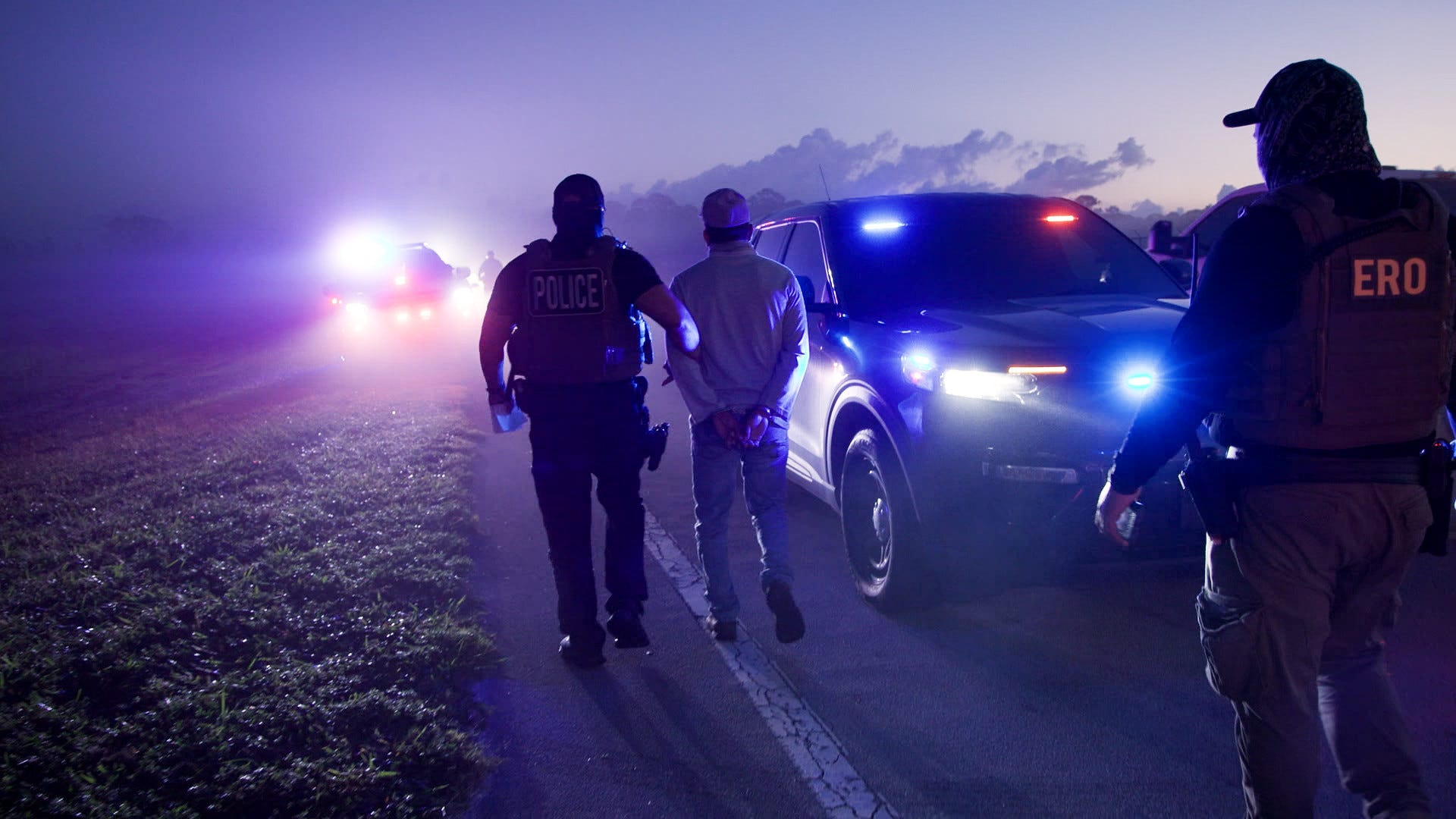
Immigration and Customs Enforcement (ICE) is preparing to significantly expand its controversial 287(g) program, according to data obtained by Jersey Signal Project. The information shows that more than 50 local law enforcement agencies across the United States are in late-stage negotiations to enter agreements allowing local officers to carry out federal immigration enforcement tasks.
The expansion would include counties, municipal police departments, and corrections facilities in states ranging from Alabama to Texas and West Virginia.
What 287(g) is:
The 287(g) program, established under Section 287(g) of the Immigration and Nationality Act, allows ICE to train and deputize local law enforcement officers to enforce federal immigration laws. Participating officers can identify, detain, and in some cases initiate deportation proceedings against individuals suspected of being in the country illegally.
Funding for the program comes from federal grants, sometimes covering salaries and overtime for local officers, training costs, and other operational expenses. Critics argue that 287(g) diverts local resources toward federal immigration enforcement rather than traditional public safety priorities.
Agencies included in the pending expansion:
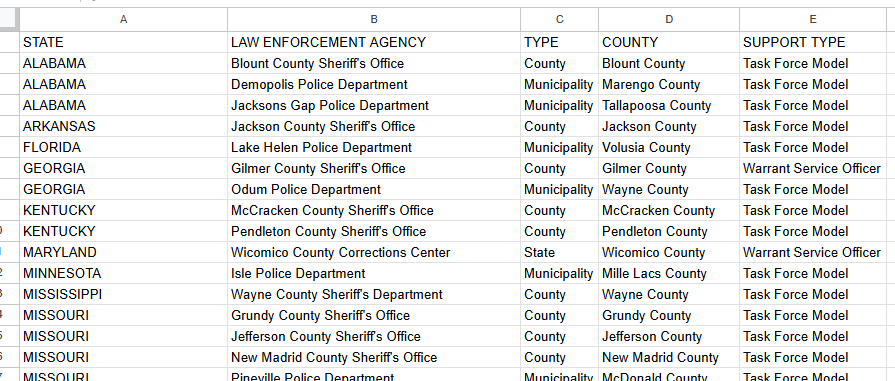
The data identifies a range of agencies, including:
Blount County Sheriff’s Office, Alabama (Task Force Model)
Demopolis Police Department, Alabama (Task Force Model)
Gilmer County Sheriff’s Office, Georgia (Warrant Service Officer)
McCracken County Sheriff’s Office, Kentucky (Task Force Model)
Wicomico County Corrections Center, Maryland (Warrant Service Officer)
Isle Police Department, Minnesota (Task Force Model)
Wayne County Sheriff’s Department, Mississippi (Task Force Model)
Collin County Sheriff’s Office, Texas (Jail Enforcement Model)
Val Verde County Sheriff’s Office, Texas (Warrant Service Officer)
Lewis County Sheriff’s Office, West Virginia (Task Force Model)
McDowell County Sheriff’s Office, West Virginia (Task Force Model)
(The full list of agencies is available in the data released with this report.)
Civil liberties concerns:
The American Civil Liberties Union (ACLU) and other advocacy groups have long criticized 287(g), arguing that it fosters racial profiling, erodes trust between immigrant communities and local law enforcement, and contributes to unnecessary detentions and deportations.
“Programs like 287(g) put community members at risk and compromise local policing,” an ACLU spokesperson said. “Expanding these agreements to more counties threatens civil liberties while doing little to improve public safety.”
Scope and funding implications:
The potential expansion would represent one of the largest rollouts of 287(g) in recent years. Participating agencies would operate under different models:
Task Force Model: Officers actively participate in joint ICE operations.
Warrant Service Officer Model: Officers assist with serving warrants for federal immigration enforcement.
Jail Enforcement Model: Corrections officers identify and detain immigrants in custody.
Federal grants typically cover training and administrative costs for officers participating in these programs, which can significantly increase federal and local budgets allocated toward immigration enforcement.
Next steps:
Agencies listed in the data are in pending agreements; no memorandum of agreement (MOA) has been finalized or publicly posted. Jersey Signal Project is releasing this information in the public interest to allow communities and lawmakers to understand the potential scope of ICE’s expansion.
Methodology / Disclaimer:
The data published by Jersey Signal Project is based on information obtained from ICE and publicly available sources. Agencies are listed as pending, and the report does not claim that any MOAs have been signed or are currently operational. The release of this information is intended to provide transparency on federal immigration enforcement initiatives and to inform public debate.