
Editorial: The Constitution Did Not Authorize Federal Occupation
ICE, Federal Power, and the Cost of Ignoring the States
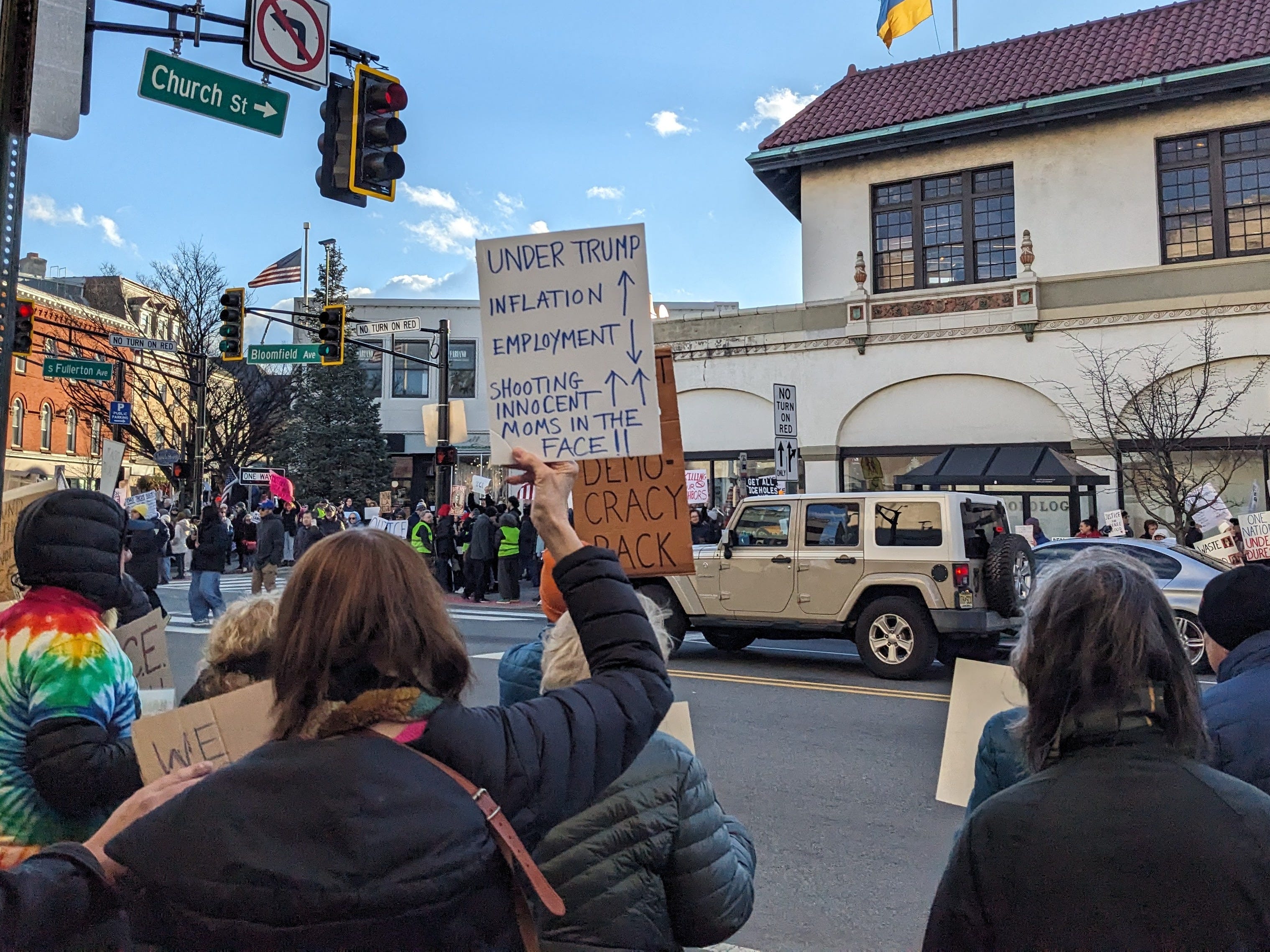
Federalism is one of the core principles of the United States Constitution: Powers not explicitly granted to the federal government are reserved to the states and the people. This concept, commonly referred to as States’ Rights, was intended by America’s founders to serve as a check and balance against the concentration of federal power.
Over time, the phrase “States’ Rights” became associated with some of the darkest chapters in American history, particularly its use as a justification for racial segregation and resistance to civil rights. That history matters and must be acknowledged. But history should not allow a small political faction to permanently co-opt one of the most important structural limits on federal authority. States’ Rights are not about exclusion. They are about accountability, proximity to the people, and preventing unrestrained centralized power.
Today, that balance is under threat in New Jersey.
Federal Immigration Enforcement Expands
Under the Trump administration, immigration enforcement has intensified nationwide and in New Jersey specifically. ICE has significantly increased interior enforcement operations, conducted raids in residential and commercial areas, expanded detention capacity, and moved to reopen facilities such as Delaney Hall in Newark.
According to data reported by The Washington Post, ICE arrests have surged into the tens of thousands annually, with detention populations reaching historic highs. A large share of those detained have no violent criminal convictions and are held on civil immigration violations alone.
“A law on the books does not mean much if the system enforcing it operates without transparency, accountability, or meaningful local oversight.”
ICE detention numbers exceeded 68,000 individuals nationally in 2025, according to figures compiled by immigration researchers and reported by Axios. In several cases, U.S. citizens have been wrongfully detained by ICE for days or weeks due to misidentification or administrative errors, with some citizens illegally expelled to foreign nations, a matter that The New York Times has explored in depth. It’s safe to say that this new brand of immigration enforcement is both unprecedented and goes well beyond securing the nation’s physical borders, reaching deep into our suburbs and cities, our schools and churches alike.
New Jersey Raids and Local Pushback
In New Jersey, ICE operations have increasingly occurred without coordination with local authorities. In Morristown, ICE agents conducted raids that resulted in multiple arrests, including the detention of a high school student. Local officials have stated that they were not notified in advance and had no role in the operation.
At the same time, the federal government has reopened Delaney Hall in Newark as a private immigration detention center, prompting protests from faith leaders, civil rights advocates, and local officials. Elected officials have been illegally blocked from touring the facilities leading to public outcry and ongoing court proceedings. As reported by The Star Ledger, city officials raised concerns about inspections, safety compliance, and the lack of municipal consent.
Federal plans to use Joint Base McGuire Dix Lakehurst for immigrant detention have also drawn criticism. New Jersey’s congressional delegation objected in a joint statement, reported by The Associated Press, arguing that military installations should not be repurposed for civilian detention and that the decision bypassed state and local input.
In New Jersey, roughly 2.3 million immigrants make up nearly one in four residents and form an essential part of the state’s workforce. This includes about 993,000 non-citizens, nearly 475,000 of whom are undocumented, who nevertheless paid an estimated $1.3 billion in state and local taxes in 2022, supporting schools, infrastructure, and public services statewide.
[New Jersey Policy Perspective]
The Killing of Renee Good and the Question of Due Process
Any serious discussion of the current state of federal immigration enforcement must acknowledge the extrajudicial killing of Renee Nicole Good, a U.S. citizen shot and killed by an ICE officer during a federal operation in Minneapolis in January 2026.
According to The Washington Post, Axios, and The New York Times, Good was neither arrested nor charged with a violent crime and was not convicted of any offense at the time of her death. The Department of Homeland Security stated that the officer acted in self defense. The Department of Justice declined to pursue a civil rights investigation, instead pressuring staff to investigate Good’s widow, a decision that has led to public protests and the resignation of multiple federal prosecutors in Minnesota.
“The Constitution does not permit summary execution. Due process is not optional.”
The United States Constitution guarantees the right to due process of law. The legal standard in this country is innocent until proven guilty, backed by the power and authority of the Fifth and Fourteenth Amendments, along with over 100 years of legal precedent. More broadly, summary execution without trial is one of the few practices universally rejected under international law, including by the United Nations and long standing human rights conventions.
Good’s death has become a national flashpoint because it raises a fundamental question. What happens when federal law enforcement operates with lethal force, minimal transparency, and limited local accountability?
Not an Isolated Incident
The Minneapolis shooting is not an isolated case. Both The Guardian and ProPublica have reported on multiple shootings and uses of deadly force by immigration agents in recent years. According to reporting compiled by numerous U.S. media sources, at least a dozen shootings involving ICE or border enforcement agents have occurred nationwide in the last several years.
At the same time, The New York Times has documented cases in which U.S. citizens were detained by ICE due to database errors or mistaken identity, sometimes for days, without access to counsel or immediate release.
These cases highlight the stakes of federal enforcement systems that operate far from the communities they affect.
New Jersey’s Local Policing Framework
New Jersey is not a lawless state in need of federal occupation. It has more than 560 municipalities and over 500 local police departments, in addition to county, state, and specialized law enforcement agencies.
These police forces are overwhelmingly drawn from New Jersey communities and funded by New Jersey taxpayers. They are subject to state accreditation standards, civilian review mechanisms, public records laws, body camera requirements, and independent prosecutors for police use of force cases.
“Local police answer to the people who fund them, vote for their leaders, and live alongside them.”
This system is not perfect, but it is accountable. Residents can attend council meetings, request records, vote out officials, and demand reforms. Federal ICE agents are not subject to these local accountability structures.
When federal enforcement enters communities without coordination, transparency, or consent, it undermines years of work aimed at improving police oversight and public trust.
Lessons From Minnesota
The unrest following federal operations in Minnesota provides a cautionary example. As reported by The Guardian and The Associated Press, large scale federal deployments led to protests, chemical agents used against demonstrators, and widespread condemnation from state and local officials.
Minnesota’s governor and Minneapolis’ mayor both criticized the federal response, arguing that it bypassed local authority and escalated tensions rather than improving public safety.
New Jersey has thus far avoided violence on that scale, something that could change rapidly in the coming months, but the underlying dynamic is the same. When enforcement is imposed rather than coordinated, trust erodes.
Why States’ Rights Still Matter
States’ Rights in this context do not mean nullifying federal law. They mean insisting that federal power be exercised with restraint, transparency, and respect for local governance.
They mean recognizing that communities have a right to choose and rely on the police forces they have built, trained, and funded, rather than having external, militarized federal forces imposed on their towns without consent or oversight.
They mean acknowledging that accountability works best when power is closer to the people.
Democracy in the Balance
The expansion of federal immigration enforcement in New Jersey raises serious constitutional and democratic questions. The killing of Renee Good underscores the consequences when enforcement operates without sufficient transparency or accountability. Due process is not a technicality. It is a core protection.
New Jersey’s residents and institutions have invested heavily in building systems of police oversight and public accountability. Federal actions that bypass those systems undermine that work and weaken trust.
History teaches us that States’ Rights should never be used to excuse injustice. It also teaches that centralized power without limits is dangerous. In a healthy republic, authority is balanced, rights are protected, and communities have a meaningful voice in how laws are enforced where they live.
That balance is not partisan. It is constitutional.
Jersey Signal Project invites policymakers, attorneys, law enforcement professionals, advocates, and elected officials to share their perspectives, analysis, or responses to the issues raised in this report. Submissions and comments may be considered for publication as follow-up reporting, expert commentary, or future podcast discussions.
Interested contributors can reach out through the Jersey Signal Project Substack or by contacting the editorial team directly.
Editor’s Note:
Jersey Signal Project is publishing this report now because it goes directly to our core mission: examining how power is exercised in New Jersey, who holds it, and how residents are affected when accountability breaks down. Immigration enforcement, federalism, and the limits of federal authority are no longer abstract legal questions. They are unfolding in real time in New Jersey communities.
This debate is part of a broader national conversation, with legal experts and former prosecutors, including CNN senior legal analyst Eli Honig, publicly weighing the constitutional, legal, and public-safety implications of expanded federal enforcement actions. It’s essential that New Jersey has a strong voice in those conversations. Jersey Signal Project will continue reporting on these issues with an emphasis on facts, law, and the lived consequences for New Jersey residents.