ICE Executes WV Immigrant Purge
650 Immigrants Snatched Up in 14 Day Raid Blitz Under Section 287(g)
Acting under Section 287(g), ICE troops from the Philadelphia office stormed West Virginia in a blitz of raids lasting just 14 days, arresting 650 persons, and activating numerous local police units funded and trained by ICE. West Virginia’s Governor Morrisey lauded the raids, stating, “…it is encouraging to work with President Trump and ICE to secure our homeland…” echoing controversial language from the federal DoL early this month which came under fire for its use of “One Homeland. One People. One Heritage.”
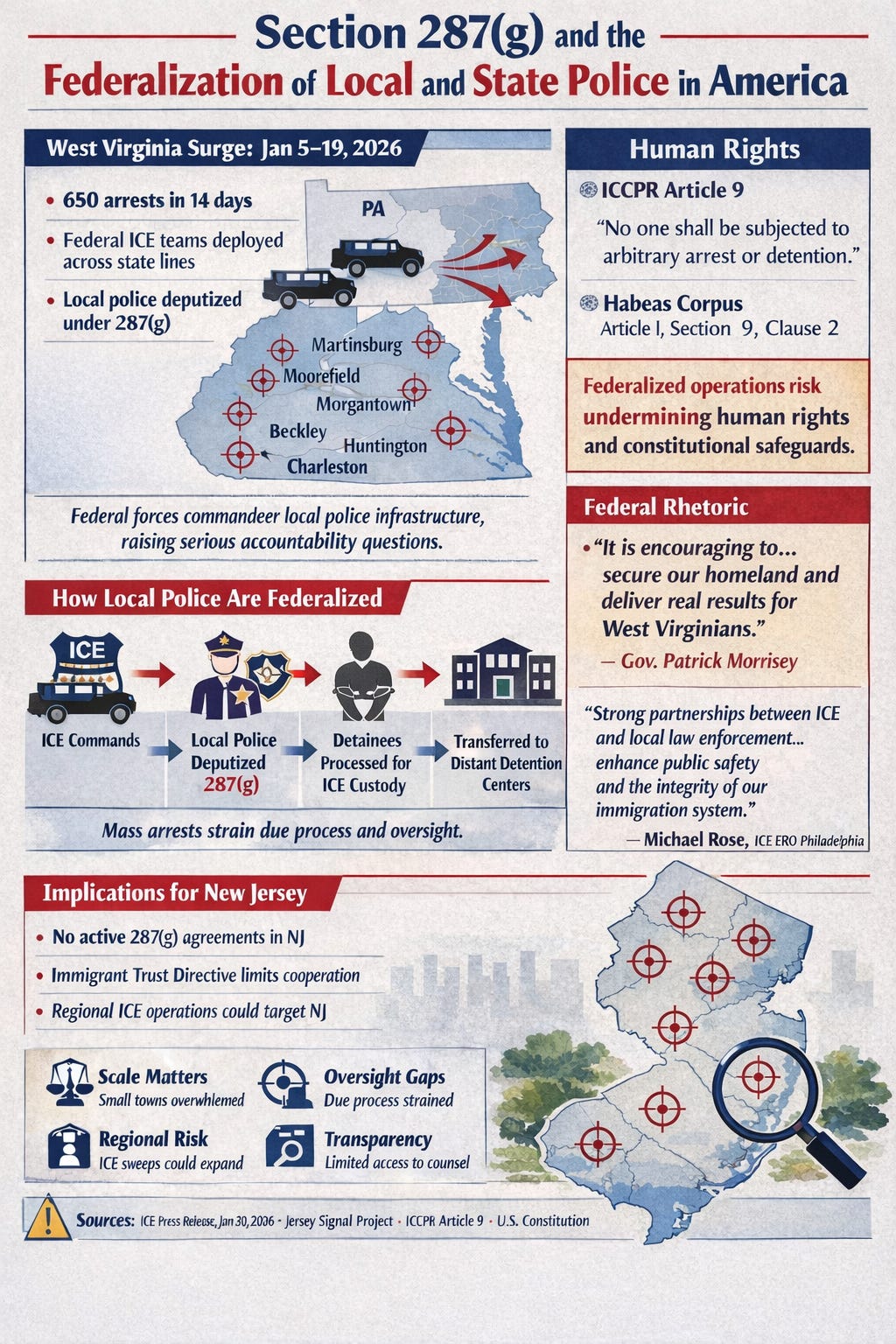
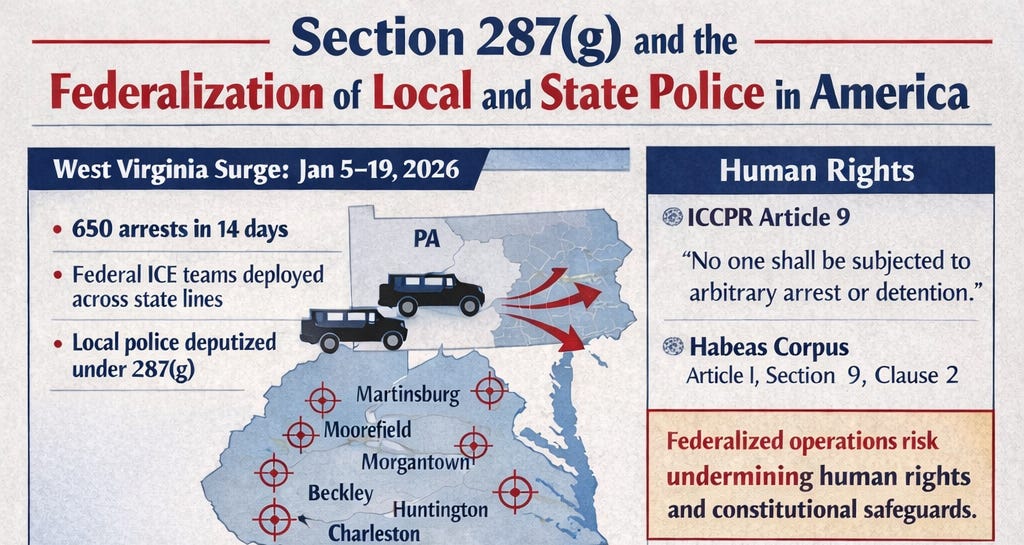
In mid-January, ICE’s Philadelphia Field Office announced the arrest of more than 650 immigrants in West Virginia over a fourteen-day period. The operation spanned Martinsburg, Moorefield, Morgantown, Beckley, Huntington, and Charleston—small and mid-sized cities, not dense metropolitan centers or border regions. ICE described the action as a “statewide surge,” carried out in partnership with 14 local law enforcement agencies operating under Section 287(g) agreements.
The scale, geography, and structure of the operation mark an escalation in tactics from ICE. This was not a targeted action: It was a demonstration of how quickly federal immigration enforcement can expand when local police forces are deputized, coordinated across jurisdictions, and directed by a regional ICE office operating outside the state where the arrests occurred.
Mass Arrest Set a Dangerous Precedent
Arresting 650 people in two weeks in a state with a population of roughly 1.8 million raises immediate questions. West Virginia does not have a large undocumented population compared to major urban states. To reach those numbers, enforcement needed to move beyond individualized investigations toward broad identification and detention practices.
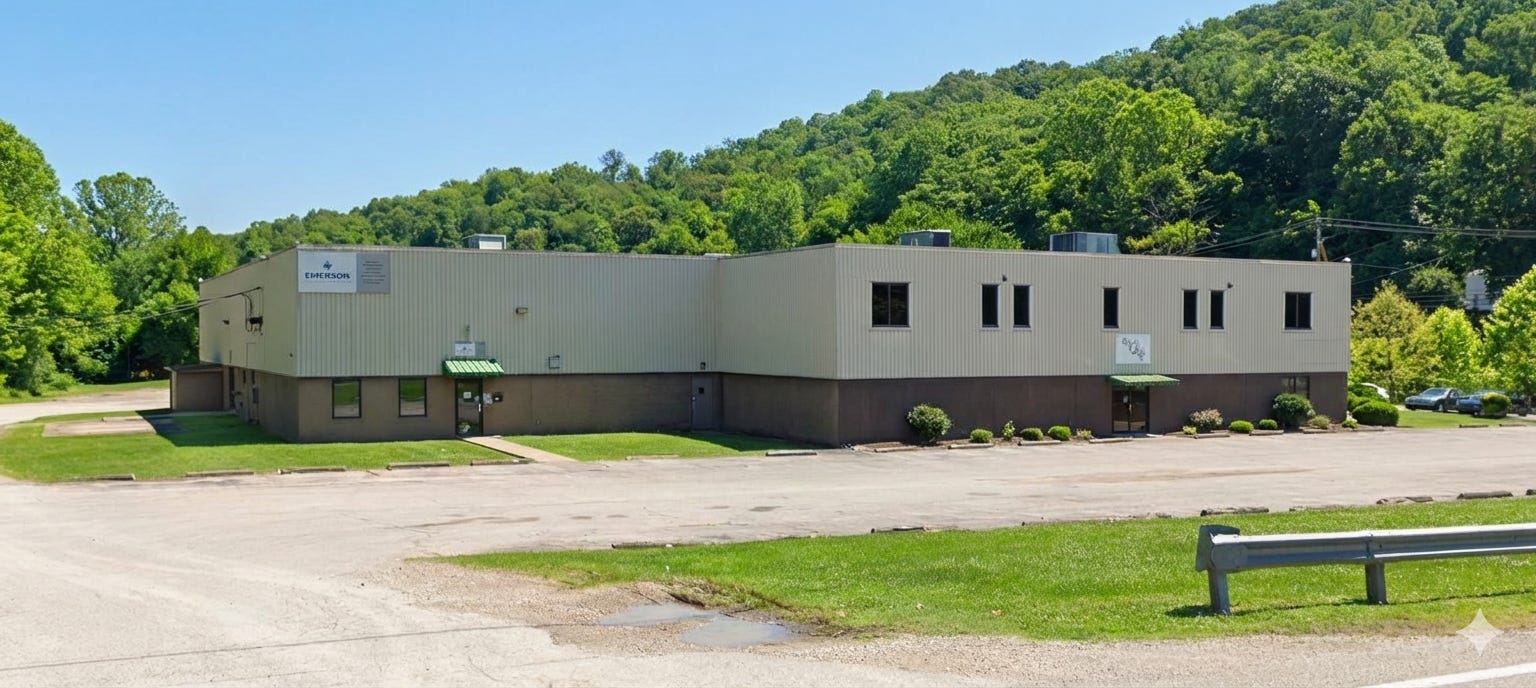
ICE’s press release withholds crucial details on how detainees were identified, where they were held, or how due process was ensured at that scale. The absence of this information is not incidental. ICE’s detention system has a documented history of overcrowding, limited access to legal counsel, and reliance on facilities located far from detainees’ communities and families. When arrests happen faster than the system can plausibly absorb them, accountability gaps widen
The Federalization of Local Police
The operation was led by ICE Philadelphia, not West Virginia authorities. Federal agents crossed state lines and worked alongside local police departments funded and staffed by West Virginia residents. Through 287(g) agreements, these local departments were authorized to perform federal immigration enforcement functions—effectively converting community policing infrastructure into a federal enforcement arm. It’s not just law enforcement either, in a controversial video, a West Virginia Fire Department used its ladder truck to transport ICE agents to the roof of a home being repaired so that they could arrest the crew of 8 working on the site.

This is the structural shift at the heart of the issue. Local police are accountable—at least in theory—to mayors, councils, county officials, and voters. Federal immigration enforcement is not. When local forces are federalized, residents lose meaningful oversight over how their own institutions are used.
Effect on New Jersey: ICE’s Grip Crosses State Lines
ICE Philadelphia’s jurisdiction includes Pennsylvania, New Jersey, Delaware, and West Virginia. The West Virginia blitz should be understood as a proof of concept. If a regional ICE office can deploy teams across state lines and coordinate a statewide operation using deputized local police in West Virginia, there is no barrier to similar actions elsewhere in the region.
For New Jersey, the implications are concrete. County sheriffs, correctional facilities, and local law enforcement agencies become potential enforcement nodes under expanded 287(g) participation. New Jersey already hosts federal detention facilities and contracts with private operators to hold ICE detainees, often far from detainees’ homes and attorneys. A surge-style operation conducted out of the Philadelphia Field Office could rapidly increase detentions without any change in New Jersey law or public debate.
New Jersey’s Immigrant Trust Directive, issued under Governor Murphy, limits local and state law enforcement from participating in federal immigration enforcement under 287(g) except in serious criminal cases. While it effectively ended New Jersey’s participation in 287(g), it is an administrative policy—not a law—and could be altered by a future Attorney General or administration.
Language, Legitimacy, and Oversight
Officials praising the operation emphasized the removal of “dangerous illegal immigrants” and framed the surge as a moral victory for “law-abiding citizens.” This kind of language collapses complex legal processes into moral absolutes, discouraging scrutiny of how arrests are made, how long people are held, and what safeguards are in place.
It also likely violates the basic legal standard of innocent until proven guilty and conflates arrest and detention with guilt, absent the due process afforded to everyone, including the undocumented, but the United States Constitution.
In democratic systems, enforcement legitimacy depends on transparency, proportionality, and proximity to the communities affected. When enforcement becomes mobile, opaque, and federally directed, those safeguards erode. The concern raised by the West Virginia operation is not abstract ideology—it is whether constitutional protections can survive enforcement models designed to operate faster than oversight can respond.